Contributors


Dreaming of conquering the European SaaS market?
Just think about all those 700 million potential customers, all waiting for your innovative software solution. But hold on to your lederhosen, because navigating the Europe SaaS market isn’t as easy as celebrating Oktoberfest.
To succeed, you will need more than just ambition. Good thing we have all the right strategies.
From understanding the European landscape to adapting your product to different cultures, this guide will teach you everything you need to know about growing in the Europe SaaS market.
The European SaaS market is growing rapidly, with projections to reach a compound annual growth rate (CAGR) of 10.6% from 2025 to 2030.
Unlike the oversaturated US market, Europe is still far from maturity. This untapped potential makes it an ideal region to focus your expansion efforts.
However, keep in mind that not every European market is the same. Countries like the UK and Germany already have established SaaS ecosystems, while others are still emerging.
So, whichever market or markets you decide to target, you’ll need some essential SaaS market insights on how to succeed.
Before you set out to conquer the Europe SaaS market, you will first need a deeper understanding of each region.
Europe is made up of multiple distinct regions, each with its own culture, economy, and tech adoption rates. Here is what you need to know about each:
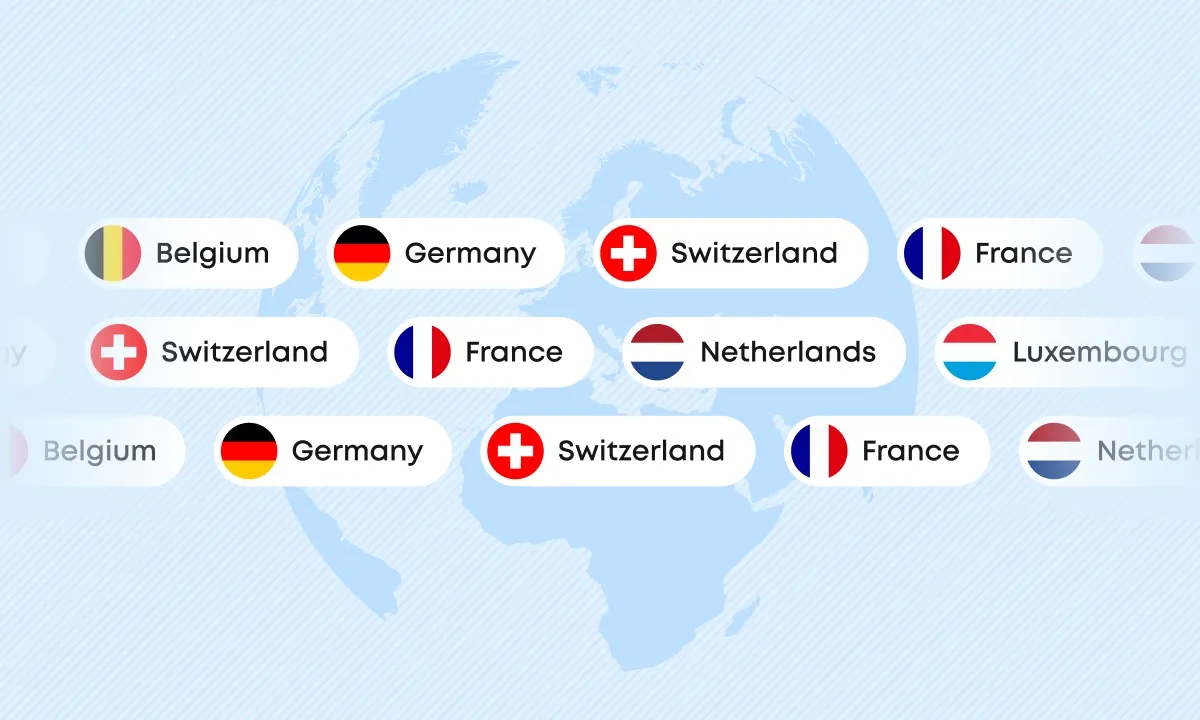
Countries included: Sweden, Norway, Denmark, Finland, and Iceland
The Nordic countries are famous for their tech-savvy nature. They have advanced infrastructures, stable economies, and a culture that embraces technology and innovation. This makes them prime markets for SaaS solutions.
Key industries include:

Countries included: Germany, France, the Netherlands, UK
Western Europe is a real powerhouse when it comes to SaaS growth. However, most of the countries in this part of Europe already have a mature market and have specific industry focuses. Still, they are a region that appreciates innovation and are always hungry for companies that have something new or better to offer.
Industry-specific opportunities:

Countries included: Italy, Spain, Portugal, and Greece
These warm countries present a mix of opportunities and challenges for newcomers and established companies alike. While there is more potential to grow in comparison to Western Europe or the Nordics, there is a gap when it comes to digital fluency across the different countries.
Key industries include:
Countries included: Poland, Hungary, Bulgaria, Czech Republic, and Romania
Eastern Europe is a hidden gem for companies looking to expand and invest. This region is experiencing a rapid digital transformation, making it an excellent candidate for SaaS companies looking to expand their business.
Industry opportunities:

Make your SaaS product feel truly local in every market with tailored strategies that speak your customers’ language.

The difference between the US and Europe isn’t just geographical. While they have their similarities, these two markets differ widely when it comes to growing a SaaS business.
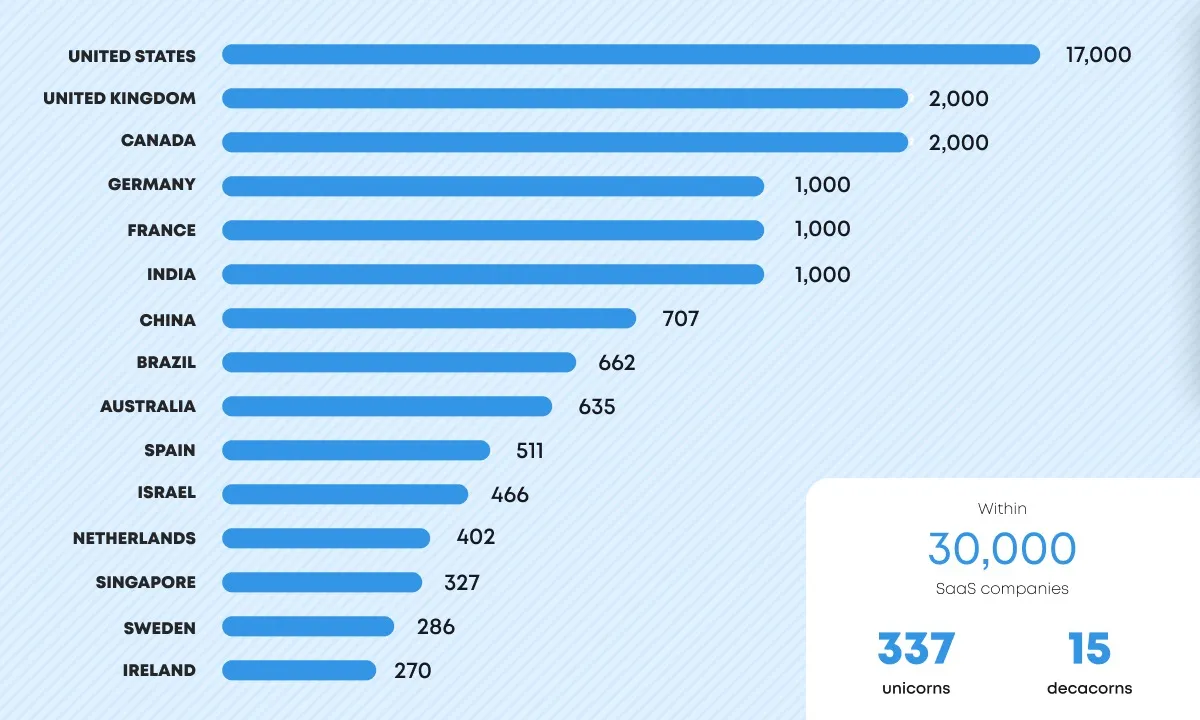
There is a reason why the US is estimated to have over 17, 000 SaaS companies – it’s an easier market to crack.
The US has a unified market, a common language, and a single set of rules and regulations that SaaS companies have to follow. All this makes it much easier to navigate the business landscape. You don’t have to worry about any language barriers or any hidden regulations.
However, the US market has also hit maturity and while there is always space for one more SaaS company, it’s getting harder to stand out.
Unlike the US, Europe is a mosaic of different countries. This means you will have to face a unique set of challenges for each one you decide to target.
European SaaS companies have to navigate through varying SaaS penetration rates, wildly different cultures, a variety of payment methods, and multiple official languages. And as if that’s not enough, you also have an abundance of regulations, strict security requirements, and compliance rules.
However, since the market has yet to hit maturity, there is plenty of room for growth, profit and development.
So, you’ve got your culturally-sensitive marketing plan in place and your dream team assembled. You’re ready to go, right? Not just yet.
Before you unleash your amazing SaaS product on the European market, you have one more hurdle to jump: the legal and regulatory landscape. Europe doesn’t joke around when it comes to laws, rules, and regulations. That’s why it’s important to be well versed in each region's requirements.
But don’t worry, it’s not all doom and gloom. Here are some essentials you need to know:
One of Europe’s most famous regulations is the GDPR (General Data Protection Regulation). This piece of European legislation is in place to protect a user’s personal information.
It’s important to familiarize yourself with the GDPR and other data privacy laws your preferred market may have. You need to ensure your company is compliant with all these laws and regulations. Some regions may be stricter than others.
So, it is crucial to check out all the nitty-gritty, fine print details of the law before launching your company.
Understanding that compliance isn’t just a legal obligation is a way to build trust with your customers, which will take you a long way.
Europeans are a diverse lot, and so are their preferred payment methods.
This means you can’t just choose one payment system and offer it to every market. Well, you can, but you aren’t going to be very popular with your European customers.

While credit cards are widely used across the world, especially in the US, many options like bank transfers, direct debit, and e-wallets are favored for their convenience and security in the Eurozone.
For example, when it comes to the Netherlands, iDEAL is a popular choice, while in Germany, SOFORT is their preferred method of payment.
Once you’ve done your homework on the market you want to target, it’s time to adapt your strategy.
Even though the Europe SaaS market may seem tough to break into, it’s not impossible. Trust us, if you win the hearts of Europeans, all your hard work will be greatly rewarded.
We’ve got plenty of local insight to guide you through the myriad of things you need to consider when trying to grow a SaaS company in Europe. Here are our top tips:
When it comes to making it big in Europe, adopting a localized approach is crucial for your success. This goes beyond just translating a couple of pages on your website. Localization is all about creating a welcoming and relatable experience perfectly tailed to each market.
You need to ensure everything is localized to the smallest of details. From translation content to even adjusting color schemes to match local preferences. While this may seem like a lot of work, it will be worth it.
BrainDonors Tip: It’s important to put in the time and effort if you want to build trust between you and your European audience.
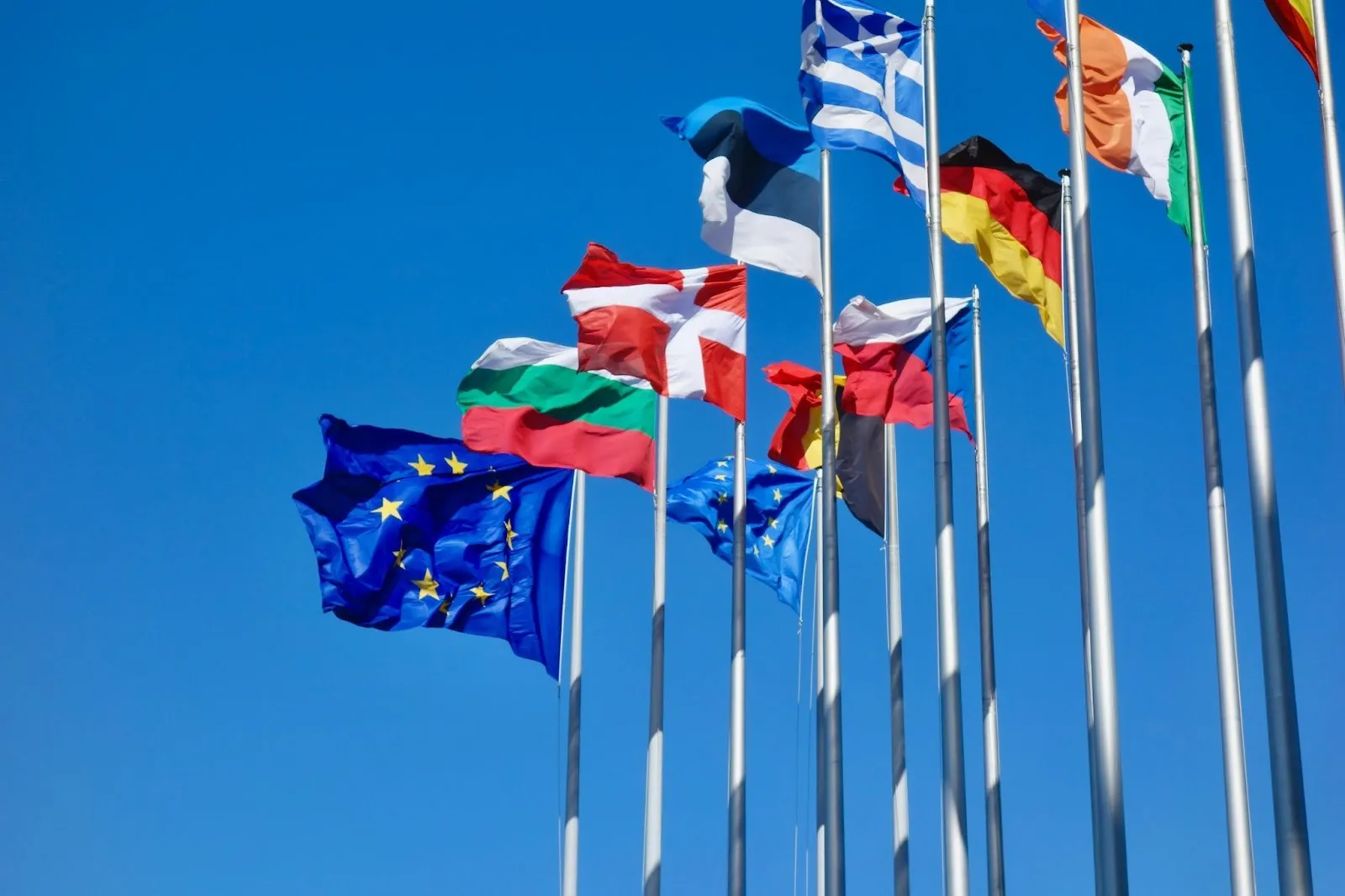
There are 24 official languages in Europe. While English is spoken in many countries, you shouldn’t rely on that to bring in clients.
If you really want to connect with your European audience, it’s best to communicate with them in their native language.
Hire a native speaker or professional translator to ensure that your message is being delivered correctly and will resonate with the local audience.
You want to be a become a part of their culture, rather than stay an outsider. That means you also need to be aware of each country's set of customs, traditions and business etiquette.
We know nobody wants to hear it, but when it comes to pricing in Europe, there isn’t a one-size-fits-all approach. What works in Western Europe may not work in Eastern Europe, and vice versa.
So, just like everything else, you also need to localize your pricing strategy.
There are 29 currencies in Europe. On one hand, you can price your product in the local currency but with the addition of an exchange rate. On the other hand, you can adopt a price sensitivity strategy and adjust your price based on the local market.
Don’t forget to take into consideration things like exchange rates, local taxes, and economic conditions when setting your prices.
Excuse us for repeating ourselves, but localization is a must, must, must! This includes your marketing efforts.
Here are a couple of ways you can save yourself from future headaches.
For one, you can invest in a high-performing European B2B sales team. Local talent usually has a better understanding of the market dynamics, the cultural nuances, and the local needs.
We also recommend partnering up with local businesses and influencers. This helps your company gain credibility from the locals and can integrate you easier into the region.
So, you’ve decided Europe is the next big move for your SaaS. Great choice. But to make your expansion a success, you’ll need a clear entry plan.
Here’s how to get started:
Step 1: Get your strategy and legal ducks in a row
Before anything else, make sure your business strategy, compliance, and legal requirements are ready. Understanding regulations, taxes, and data protection rules in your target countries is essential.
Step 2: Start small and test
Take a phased approach. Begin with one or two key markets before expanding further. This allows you to test strategies, gather feedback, and make adjustments to ensure success across different regions.
Step 3: Build a strong local network
Connections matter. Join industry associations, attend local events, and connect with potential customers and partners. Establishing relationships can open doors to new opportunities and give you a deeper understanding of the market.
Expanding your SaaS company into Europe can be quite the challenging endeavor, we know. However, if you play your cards right, it can also be a very rewarding experience.
Want more insights? Check out our detailed guide on how to grow your business in Europe.
The Europe SaaS market is awaiting you, brimming with potential customers. And here’s the good news: you don’t have to do it alone!
If you feel overwhelmed or need some expert advice, our team is one call away.
As an agency well-versed in helping international companies enter and grow in the European market, we can help you on your way to European domination!
SaaS is a highly competitive field because of the low barriers to entry. In a nutshell, anyone with a good idea and some technical expertise can develop and launch a SaaS product. The competition in this field may be daunting to newcomers, however, it’s a great way to drive constant innovation. This way, companies have to continually improve their offerings in order to stay ahead of the curve.
Yes, SaaS is absolutely a growing and thriving industry. Due to factors like the increasing adoption of cloud computing, the growing demand for subscription-based software models, and the rise of remote work, there is a rapid growth in the market. Market research suggests that the global SaaS market size is expected to reach $700 billion by 2024.
The United States has the most SaaS companies (around 60%), thanks to its strong tech ecosystem, abundant venture capital, and innovation hubs like Silicon Valley. The US has around 54 billion SaaS customers, including repeat users.
Industries like healthcare, finance, e-commerce, and education are ideal for SaaS. These sectors benefit from SaaS solutions to address challenges like compliance, data management, and customer engagement, leveraging their flexibility and scalability.