Contributors

Tsvetomira Andreeva
SEO Specialist

Georgi Stoychev
Team Lead SEO & AEO
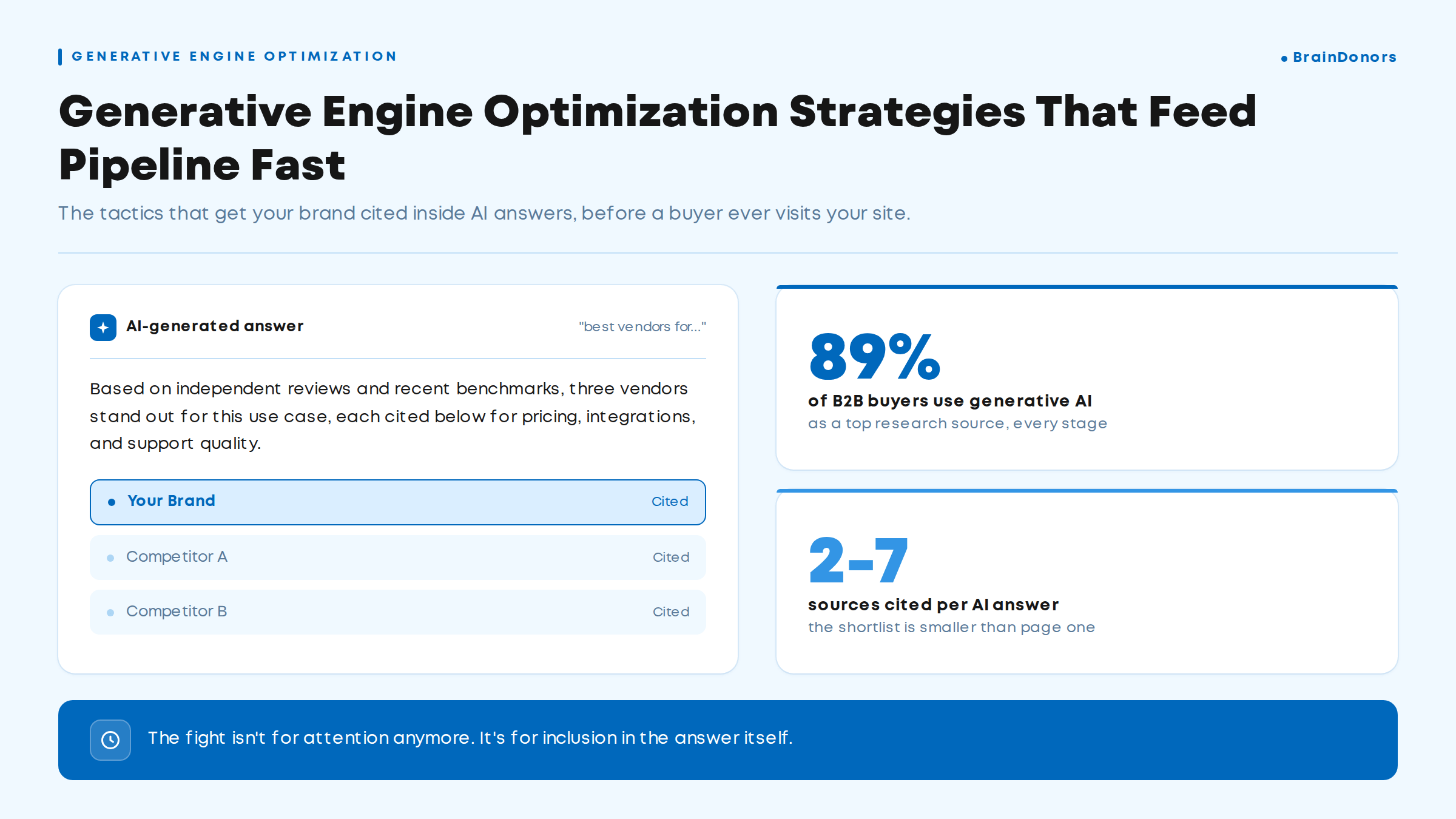
A B2B buyer opens ChatGPT, asks it to compare three vendors in your category, reads the summary, and closes the tab. No visit to your site. No form fill. No idea you exist. Three weeks later they show up in your inbound pipeline already knowing exactly what they want, and possibly already leaning toward a competitor because that's who the AI mentioned first.
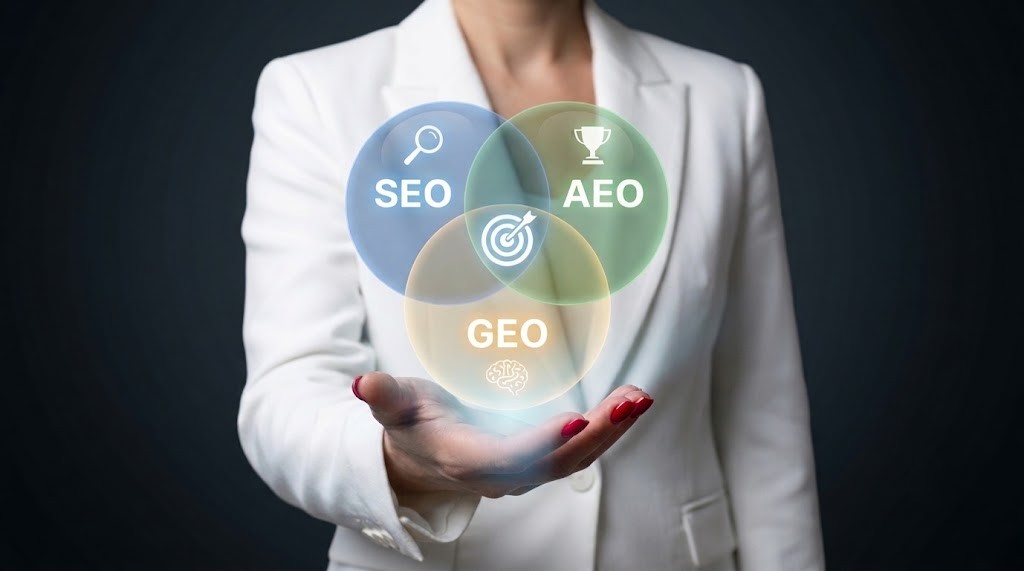
That's the reality generative engine optimization strategies exist to fix. In plain terms, they're the specific methods that get a brand quoted, cited, or recommended inside AI-generated answers, on tools like ChatGPT, Perplexity, Gemini, and Google's AI Overviews, instead of only showing up as a ranked link on page one on Google.
We build these strategies into client SEO and content programs at BrainDonors every day, across SaaS, tech, and B2B services accounts, so what follows comes from actual campaign work, not a trend piece written from the sidelines. Below, we'll cover what these generative engine optimization strategies are, why they matter to your demand generation numbers specifically, which channels actually move the needle, how we build them for clients, what results are realistic, and the myths worth ignoring.

Generative engine optimization strategies are the tactics a B2B marketing agency uses to get its content, data, and expertise pulled into AI-generated answers rather than left out of them. Instead of competing for the number one organic spot, you're competing to be one of the handful of sources an AI model chooses to summarize, quote, or recommend when someone asks it a question related to your category.
That distinction matters more than it sounds. Traditional SEO measures success by rank position and click-through rate. Generative engine optimization strategies are measured by whether you show up inside the answer at all, whether the AI credits you by name, and whether that mention pushes someone toward a demo request instead of a competitor's.
One thing worth being direct about, because a lot of GEO content online overstates it: this isn't a brand new discipline that requires throwing out your SEO playbook.
Google's own search team has said plainly that standard SEO, meaning helpful, well-structured, well-sourced content, is what actually drives visibility inside AI Overviews and AI Mode, and that a separate "AI SEO" toolkit isn't necessary.
So the honest framing is that generative engine optimization strategies are an extension of good content and SEO practice, applied with AI retrieval in mind, not a replacement for everything you already know about ranking well.
That extension does pull in a few channels that sit outside classic on-page SEO, high-quality backlinks and digital PR still build the authority signals AI models look for, and platforms like YouTube and Reddit carry outsized weight because AI systems treat user-generated, independently verified content as more trustworthy than brand-published copy.


Here's the part most GEO guides skip, and it's the part that actually matters to a CMO: this isn't just a visibility exercise, it's a demand generation problem with a new front door.
Forrester's Buyers' Journey Survey found that 89% of B2B buyers have adopted generative AI, naming it one of their top sources of self-guided information in every phase of the purchase process.

The psychological shift underneath that stat is what should worry (or excite) you. When a buyer reaches out after that kind of AI-assisted research, they aren't exploring anymore. They're validating a decision that's already mostly made. That changes what your website, your sales team, and your content need to do for that visitor.
This is also why generative engine optimization strategies now belong inside demand generation planning, not off to the side as a technical SEO checklist item.
If an AI model never mentions you during that invisible research phase, you don't get a shot at the shortlist, full stop, no matter how good your outbound sequence is.
This is exactly the kind of upstream visibility work our team handles as a B2B demand generation agency, mapping where AI models already mention (or quietly skip over) a brand before writing a single new page.
In other words, AI isn't expanding how many vendors get a real look, it's compressing which ones do. Fewer vendors make the shortlist at all.
The fight isn't for attention anymore, it's for inclusion.
If you'd like a deeper look at how this shift is changing modern B2B marketing, read our guide on B2B Demand Generation Explained, where we break down the strategies, channels, and frameworks behind building predictable pipeline growth.
AI models don't invent opinions about your brand from nothing. They pull from what's already published and trusted across the web, so the channel mix for generative engine optimization strategies looks a lot like a strong demand gen channel mix, with a sharper focus on structure and third-party validation.
That focus shows up across five channels in particular:

Channels tell you where to show up. These are the specific moves that determine whether AI systems can find, understand, trust, and cite your content once you're there.
Our process starts with an honest audit, not a rebuild. Before touching a single page, we check where a brand already gets mentioned (or ignored) across ChatGPT, Perplexity, and Google's AI features for the questions its actual buyers are asking. That baseline shapes everything after it.
From there, the work usually breaks into four stages.
We ran a version of this playbook for Hypergen, a B2B service provider competing in a crowded agency market.
Over a four-month stretch, the combination of keyword and sitemap optimization, new SEO-optimized content aligned with real search intent, and technical SEO and structured data improvements transformed the site's organic performance.
Compared to the same period the previous year, these efforts delivered a 12x increase in total impressions, a 42% increase in clicks, 4x more organic leads, and a 100% increase in AEO visibility.
You can read the full breakdown in our SEO and AEO case study.
None of that works in isolation from the rest of the funnel. Once AI-referred traffic starts arriving further along in its decision, the handoff to HubSpot implementation services and lead routing matters as much as the content itself.
That’s typically where our work as a B2B inbound marketing agency picks up: making sure that decision-ready visitor lands on a page built to close, not one built to introduce.
The honest answer is: similar timelines to strong SEO, with a visibility bonus layered on top.
Most clients start seeing measurable movement in AI mentions and citations within 90 to 180 days, roughly the same window it takes solid SEO content to compound, because the underlying content and technical work overlaps heavily.
What we'd caution against is chasing a single vanity number like "we got mentioned in ChatGPT once." One citation means little.
What matters is consistent, repeatable visibility across the specific questions your buyers actually ask, which is why tracking needs to happen on a recurring basis, not as a one-time check.
A lot of GEO advice circulating right now overstates how different this discipline really is. Worth clearing up, directly from Google's own guidance:

Generative engine optimization strategies aren't a side project bolted onto your existing SEO plan, and they aren't a mysterious new discipline either.
They're what happens when solid content and SEO work gets built with one more audience in mind: the AI models your buyers now consult before they ever talk to your sales team.
Get the fundamentals right, structure content around real buyer questions, back it with credible data, and measure whether AI systems are actually citing you, and the pipeline impact follows the same compounding pattern good SEO always has.
If you're weighing where to start, the honest starting point is usually the same one we use with clients: find out where AI models already mention (or skip) your brand today.
From there, whether the priority is content, technical structure, or aligning it all with a broader B2B growth marketing agency strategy, the plan gets built around what your buyers are actually asking, not a generic checklist.
No. Generative engine optimization strategies build on the same foundation as SEO, including crawlable technical structure, quality backlinks, and genuinely helpful content. The difference is the intended output: SEO aims for a high organic rank, while GEO aims for a citation or mention inside an AI-generated answer. Most brands need both working together rather than choosing one over the other.
Start with ChatGPT and Google's AI features, since they currently reach the largest share of B2B research traffic, then expand to Perplexity and Microsoft Copilot as resources allow. The right priority order can shift by industry, so checking where your specific buyers already show up in AI-driven research is more reliable than following a generic ranking of platforms.
Some technical work helps, particularly clean HTML, fast page speed, and structured data, but it doesn't require a dedicated engineering team to get started. The highest-impact early work is usually content restructuring: clear direct answers, credible sourcing, and organized headings, which an experienced SEO Copywriter or SEO specialist can handle without custom development.
Track AI mentions and citations across the platforms your buyers use, alongside standard organic metrics like impressions and clicks. Tools built for AI visibility tracking can show which platforms mention your brand, how often, and in what context, which gives you a clearer picture than organic rankings alone.
Yes, and often more efficiently than for larger teams, because the highest-leverage work (restructuring existing content for clarity and adding credible data) doesn't require a large budget. A small team that picks a handful of core topics and does this well will typically see stronger AI visibility than a large team spreading thin content across dozens of topics.