



clients worldwide
B2B RevOps Agency
The RevOps Agency Behind Consistent, Scalable Revenue Growth
Sales chases closed deals. Marketing counts MQLs. Customer success watches MRR & NRR. When each team optimises for its own metric, revenue leaks from every gap between them. We build the RevOps infrastructure that aligns all three around shared data, a shared process, and forecasts your leadership can actually act on.






Trusted by World-Renowned Brands






















What Good RevOps Looks
Like in Numbers
The Operational Problems That Are Costing You Revenue
B2B companies lose an estimated 20–30% of potential revenue to operational gaps. Not from bad products or bad salespeople. From broken processes, fragmented data, and teams that optimise in opposite directions

Siloed Teams, Missed Revenue
Marketing celebrates lead volume while sales complains about quality and CS watches churn creep up. Three teams, three scorecards, and three completely different versions of the same broken revenue reality (all of them presented with convincing data).
CRM Data Your Team Stops Trusting
B2B contact data decays at around 22% per year. So deals sit in forecasts based on champions who left months ago. And reps spend up to 27% of their time managing records instead of selling (because if you cannot trust the system, you compensate for it manually).
No Single Revenue Source of Truth
Marketing reports $2.8M of influenced pipeline. Sales claims $1.9M. Finance books $2.3M. And nobody is lying, to be clear. They are just measuring different things with different tools and nobody is reconciling them afterwards.
Sales & Marketing Not Aligned
When marketing passes leads to sales or sales transitions accounts to CS, context gets lost. There are no agreed lead definitions, no SLAs, no documented workflows. Deals die in transition (quietly, somewhere in someone's to-do list) and nobody can explain why.
A Tech Stack Nobody Controls
The average B2B tech stack is roughly a third purchased and unused. Data lives in separate islands, leads fall through the cracks between tools, and manual re-entry compounds every error further downstream. The stack that was supposed to create efficiency ends up creating actually more work.
Forecasts Leadership Cannot Act On
Long B2B sales cycles and multi-stakeholder buying make forecasting hard by nature. And when stage definitions drift and CRM hygiene is poor, forecasts miss consistently, which is why CFOs plan conservatively. It is the rational response to a number they cannot trust.
Not Every Revenue Problem
Needs a Full Rebuild
Some companies know exactly what is broken and need a team to build the fix. Others suspect something is wrong but cannot pinpoint what. Wherever you land on that spectrum, that is the starting point we work from.

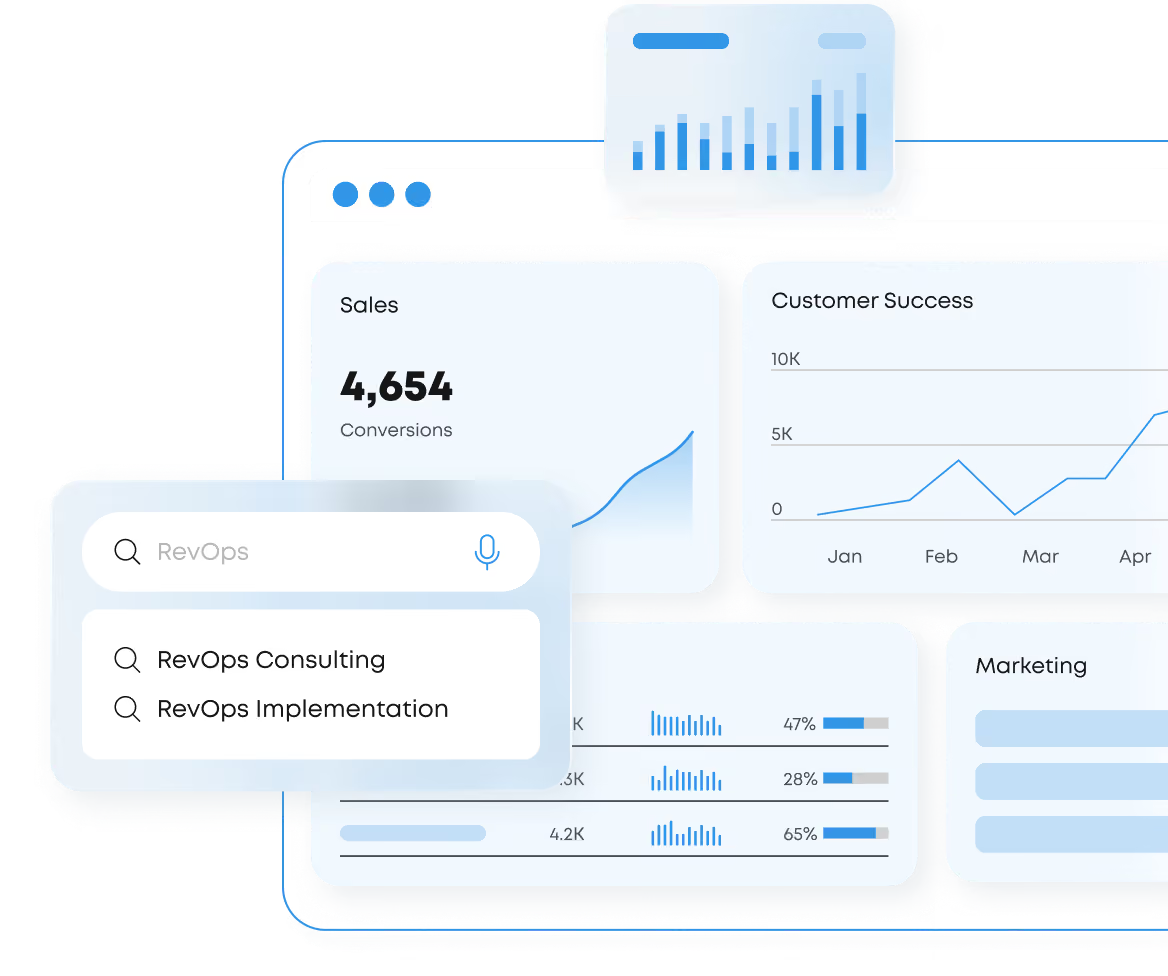
RevOps Consulting
You do not always need a complete rebuild. Sometimes you need clarity: what is broken, why it is broken, and what the right fix looks like. We audit your revenue architecture, map your current processes, and hand you a prioritised action plan your team can act on immediately.
This is right for you if:
You have a revenue problem you cannot fully diagnose on your own, or you want clarity on exactly what to change (and in what order) before any system is touched.
RevOps Implementation
Knowing what is broken is the first step. But building what should replace it is where revenue actually changes. We design and implement the full RevOps infrastructure: process architecture, CRM configuration, automation, reporting, and the dashboards your leadership opens every day.
This is right for you if:
You have the audit (ours or someone else's) and you need an experienced team to build the full infrastructure properly: process design, CRM, automation, reporting, and the dashboards your leadership will actually use.

The Complete RevOps Build Your Revenue Teams Need
Everything required to turn three misaligned teams into one revenue engine with shared data, shared process, and shared accountability from first touch to renewal.

Revenue Process Mapping
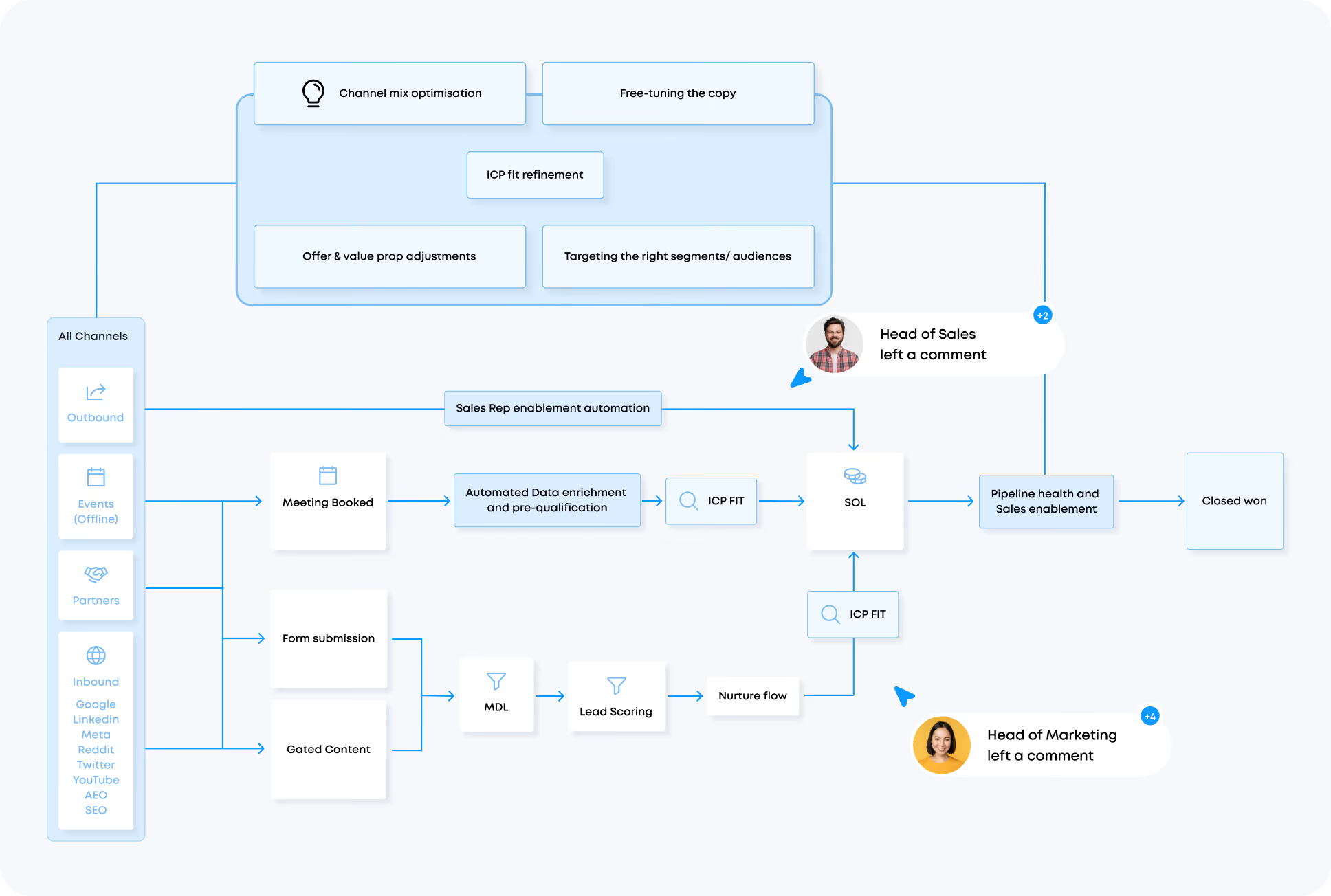
A fully documented lead-to-revenue map, agreed by sales, marketing, and leadership, with every stage defined, every gap identified, and every handoff owned by a specific team. Not a diagram that gets filed. A working document every team actually references.

CRM Architecture Review
A clear assessment of whether your current CRM can support the process improvements you need, with specific architecture recommendations. And If not, we plan the migration path before anything is touched.

Pipeline & Deal Stage Design
A custom pipeline built around how your team actually sells, with every stage definition agreed and documented. No more "Proposal Sent" stages that mean three different things to three different reps.

Workflow & Automation Setup
Every workflow built, tested, and documented in plain language so your team understands what fires, when it fires, and why, without needing us in the room to explain it afterwards.

Attribution & Revenue Reporting
A single, agreed attribution framework that sales, marketing, and finance all accept, replacing the credit-assignment arguments that happen every quarter with account-level measurement everyone trusts as the truth.

Dashboards by Role
Separate, role-specific reporting views for your VP Sales, CRO, CMO, and RevOps function, each built around the metrics that matter for that role. Nobody is digging through data that belongs to someone else's job description.
Handoff Definitions & SLAs
A documented set of lead definitions, agreed SLAs between teams, and handoff workflows that every team has signed off on, so no deal dies in transition and CS always inherits full context from every sale that closes.

Ongoing RevOps Support
A standing engagement with our team to test what is working, make the improvements that compound over time, and keep the revenue architecture aligned with how the business grows. Because it will grow (and the system needs to grow with it).
Not Our Words. Theirs.




Our RevOps Process,
Phase by Phase
Map the Process
Before we touch a single system, we document how your business actually works. We map your full lead-to-revenue journey in collaborative sessions (the ones where people start by saying everything is fine and end up identifying six things nobody had put into words before): how leads arrive, how contacts move through stages, how deals are managed, and where the real
gaps are.
This is the foundation. Everything we build is grounded in this mapping, not in assumptions about how a company like yours should work.
Output:
A documented revenue process map, reviewed and agreed by your stakeholders, covering every stage from first lead to closed deal, with every gap named and every handoff owner identified.
Assess the System
Once the process is mapped, we evaluate whether your current CRM and tech stack can genuinely support the improvements you need. We assess architecture, user permissions, data model, and system configuration against your actual sales design, not against what the vendor promised it could do.
If your system supports the changes, we build on it. If it does not (and sometimes it honestly cannot), we plan the migration or integration path before anything is touched
Output:
A clear system decision ( build on the current CRM or migrate) with full architecture documentation, an honest gap analysis, and a technical roadmap agreed before any implementation work begins.
Build the Infrastructure
With the process mapped and the system decision made, we build. CRM configuration, pipeline design, data model, user roles, and integrations go in correctly from the start.
Any data migration runs in parallel: mapped, cleaned, deduplicated, and validated before anything goes live (because bad data migrated into a new system is just bad data in a new location). If additional tools are needed to support the new sales design, we identify and integrate them here.
Output:
A fully configured CRM with clean migrated data, integrated tools, and every pipeline stage and data model built around your agreed sales process, ready for the team to use from day one.
Automate the Workflows
Once the infrastructure is stable, we layer in the automation: the logic that makes your revenue system work on behalf of your team, rather than requiring them to manage it manually.
Every workflow and sequence is documented as it is built, so your team understands what runs, when it runs, and why. No automations that only the person who built them can explain. (Because people leave, and the system needs to outlast the individuals who set it up.)
Output:
A complete automation layer with every workflow documented in plain language, tested, and running correctly.
Set Up the Dashboards
We build the reports and dashboards that give your leadership and revenue teams clear visibility into what is actually driving the business. Each dashboard is role-specific (because one universal dashboard is a dashboard nobody uses): the VP Sales sees pipeline and rep performance, the CRO sees coverage and forecast, the CMO sees attribution and sourced revenue.
Then we train your team, so they go live knowing exactly how to use the system, with recorded sessions for everyone who
joins later.
Output:
Role-specific dashboards for every revenue function, a trained team that knows exactly how to use them, and recorded sessions with documentation for anyone who comes after.
Test, Measure & Improve (Ongoing)
Revenue operations is not a project with an end date. After the infrastructure is live, we test whether it is working, measure what the data is telling us, and make the adjustments that compound over time.
In practice, this means monthly or quarterly reviews of the full revenue architecture, a standing record of what has been tested and changed, and an ongoing partner relationship. The system you have after 12 months should be significantly more effective than the one on day one. That is the intention from the start.
Output:
A standing improvement cycle with regular reviews, updated architecture documentation, and an ongoing record of what has been tested, what changed, and why, so the system keeps pace with the business.
Your Pipeline + Your Data + Your Teams.
Finally Aligned.
The RevOps Problem at 5 Reps Is Not the RevOps Problem at 100
At 5 reps, the process lives in someone's head and mostly works. At 30, everyone runs a different version of it. At 100, the system was built for a team a third of its current size. The fix is different each time (and so is the scope of the work).
Foundation Stage
Seed to early revenue, under 5 reps, no formal process yet
Growth Stage
5–50 reps, $5M+ ARR, leadership losing hours to ops every week
Scale Stage
50+ reps, multi-market, complex revenue architecture across regions
Working With Leaders Who Are Owning the Growth
VP SALES
CMO
CRO
HEAD OF REVOPS
VP CEO
Your Industry Has Specific Revenue Challenges. We Know Them.
The same RevOps principles apply across B2B, but the architecture that works for a fintech scaling through Series B looks nothing like the one a legal firm needs to track matter-based revenue. We configure RevOps around the way your industry actually generates and retains it.
What Feeds Into Your RevOps Reporting
HubSpot
Most of the RevOps builds we deliver run on HubSpot, from pipeline configuration to the automation layer underneath it. If your CRM is the problem, this is where we fix it.
PPC
Every dollar of ad spend needs a home in the same attribution model as everything else, or the CFO conversation about marketing ROI never actually gets resolved.
SEO
Organic pipeline has to be measured the same way as paid pipeline, or your revenue architecture is only telling half the story.
Web Development
The forms and tracking on your site are the first data points in the entire system. If they are not built correctly, no amount of RevOps fixes what happens downstream.
RevOps Built Right Produces Results Like These













Fix the Revenue Gaps Before They Cost You Another Quarter
From misaligned teams and broken handoffs to CRM setups nobody trusts, we have worked through every operational problem a B2B revenue team runs into. Yours is not the exception.
Why Companies Choose Us as
Their B2B HubSpot Agency

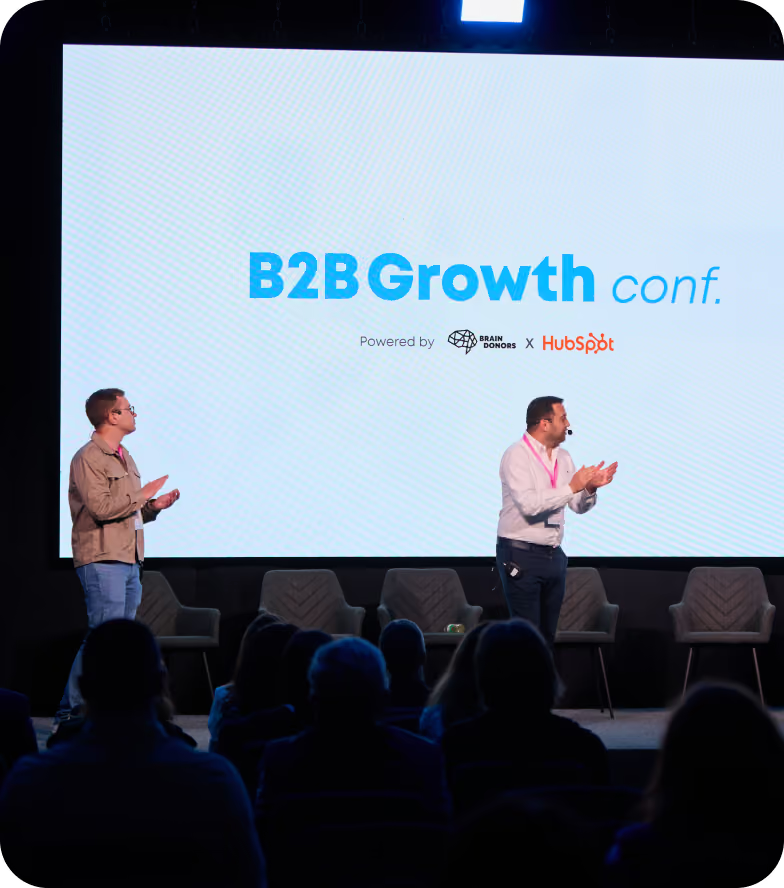


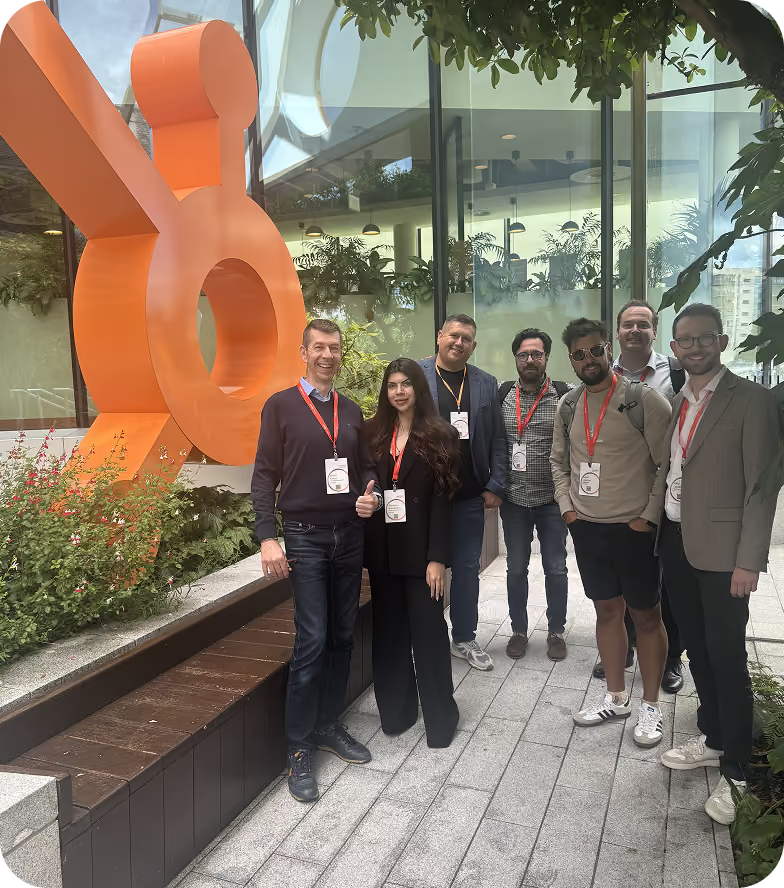
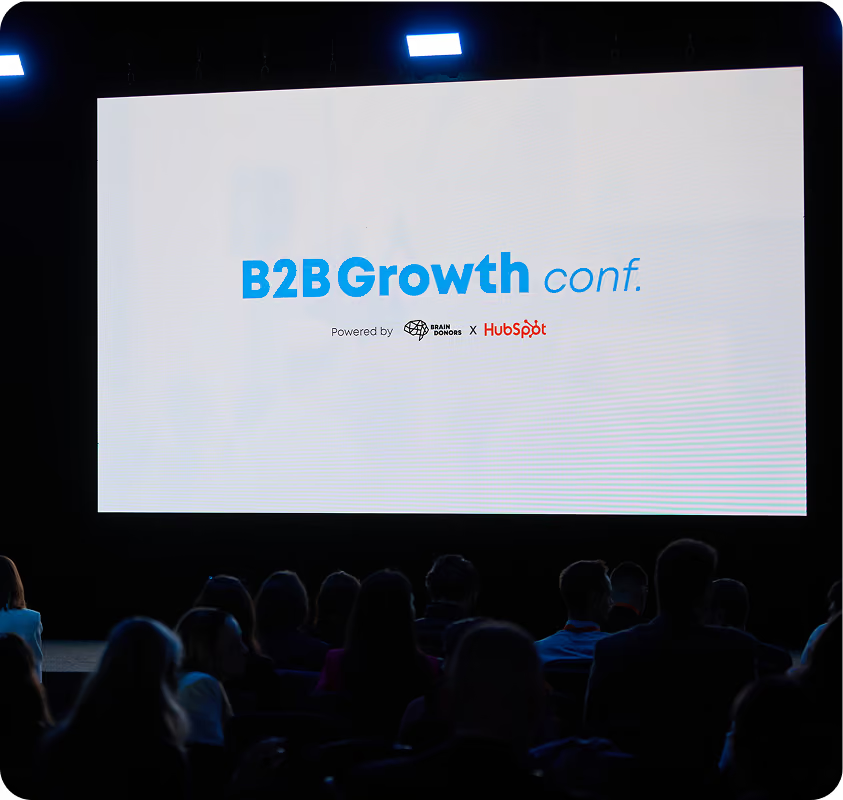
Backed by HubSpot to Drive B2B Growth
BrainDonors + HubSpot = B2B Growth Conf. One of a kind conference that brought together marketing, sales, and RevOps leaders for a full day of talks, panels, and real conversations about modern B2B growth.


20+


400+
Your HubSpot Accredited Agency Partner









Frequently Asked Questions
Sales Ops focuses on optimising sales team performance: territories, quotas, CRM administration, and forecasting. RevOps goes further: it spans the full customer lifecycle, aligning sales, marketing, and customer success around shared data, shared processes, and shared accountability from first touch to renewal. In other words, it is not a rebrand of Sales Ops. It is the operating system for the entire revenue function, not just one team within it.
Most B2B companies benefit from a structured RevOps foundation around 10–15 sales reps or $5M+ ARR, when leadership starts losing 10+ hours a week to operational work rather than revenue. That said, the right time depends more on symptoms than headcount. If your forecasts are unreliable, your teams are misaligned, or the CRM is something your reps work around rather than with, that is the right time to build the infrastructure properly, regardless of where you are on the revenue curve.
Not necessarily. The first thing we do is assess whether your existing system can support the process improvements you actually need. If it can, we build on it and that is the outcome in a good number of engagements. If it cannot, we plan the migration path and manage it from start to finish. To be clear, we do not recommend change for its own sake. We recommend it only when the current system is genuinely holding the revenue architecture back, and when the data supports that conclusion.
It depends on the starting point and the scope, and we will tell you clearly during the scoping phase. As a general guide: a consulting engagement producing an audit and action plan typically runs four to six weeks. A full RevOps implementation (process mapping, CRM configuration, automation, dashboards) typically runs eight to sixteen weeks. Ongoing support engagements run on a retainer basis with no fixed end date.
Yes, and we do it regularly. Auditing and improving existing revenue architectures is a significant part of what we do. If your current setup is not delivering what you need, we will tell you clearly what is working, what is broken, and what needs to be rebuilt from scratch. There is no RevOps setup we cannot assess honestly and no honest assessment we are not comfortable delivering, even when the answer is not what someone expected to hear.